
From Idea to Working Hardware
When we entered ESA BIC Poland in 2024, we had a vision and a lot of CAD files. Now, with baseline incubation complete, we have working prototypes, a growing team, a laboratory of our own, and a seat at the table where Europe's in-orbit servicing standards are being written.
Over the course of the programme, we took CIRI (our Common In-space Refuelling Interface) from concept sketches to validated hardware at TRL 4. For a startup that didn't exist before October 2023, that's worth celebrating. And with the recent award of ESA BIC Incubation Boost and our ESA Phi-Lab Poland ADONIS project, we're already into the next phase.
What we built
Thanks to funding from ESA BIC Poland, we were able to kickstart our prototyping process.
With the goal of building our tanker satellites in mind, we set out to identify and develop the technologies that are currently missing but necessary to make in-orbit refuelling happen at scale. Fuel management in orbit is not new, but transferring it between satellites, especially at the volumes and economic efficiency needed for commercial in-space logistics, is a very different problem from the space station resupply missions we've seen so far.
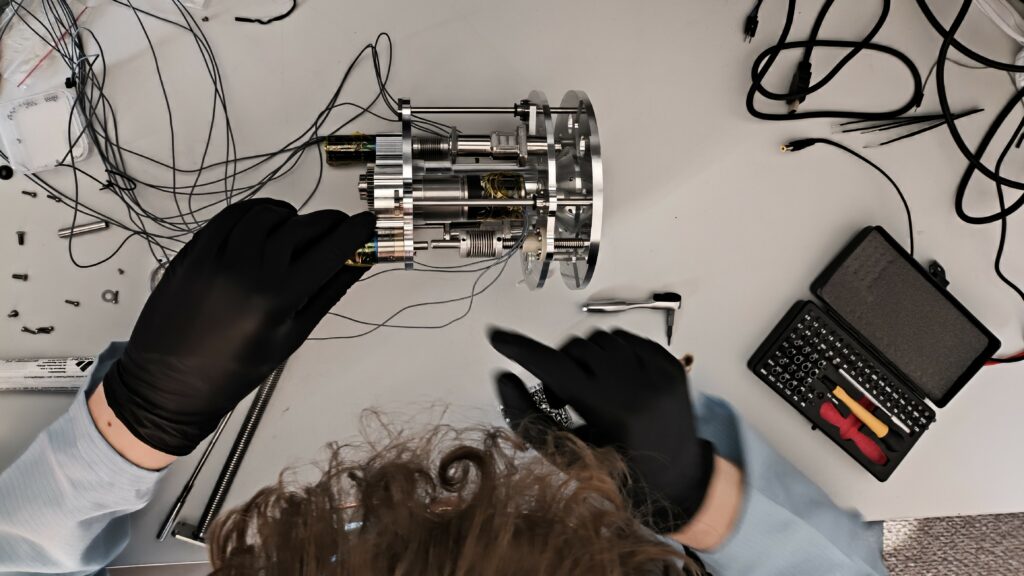
We found that the biggest gaps were in the physical interface (how two spacecraft actually connect and transfer fluid) and in the navigation layer (how a servicer finds, approaches, and aligns with its target). No widely adopted standard existed for either, and without standards, every mission ends up reinventing the wheel.
That's where CIRI comes in. As Europe defines the open standards for space logistics docking interfaces, we're actively contributing to ESA's work on common in-orbit servicing interfaces through FLPP and InSPoC, and our design goal is to converge with the standards that emerge from that process. We build, we test, we feed what we learn back into the conversation.
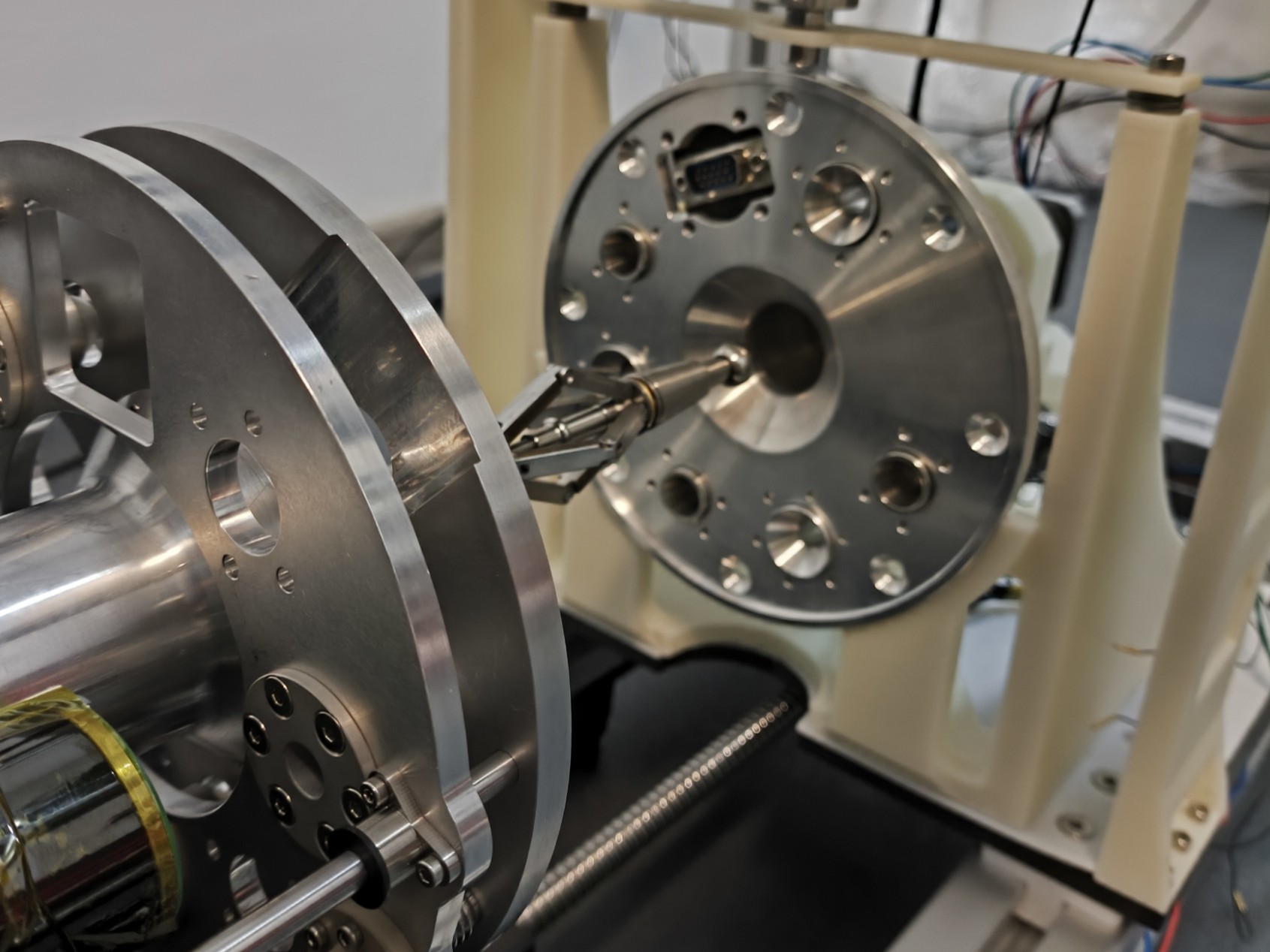
We built the CIRI Controller (a modular three-board electronic stack with radiation-tolerant components) and a custom 4-DoF test stand that lets us verify capture performance repeatably. Real hardware, real results, and a foundation we can keep iterating on as the standards mature.
What we learned
Early prototypes opened doors to real conversations with servicing operators, satellite manufacturers, and mission integrators. Those conversations reshaped our product strategy in ways we didn't expect.
One thing that became clear quickly is that orbital fluid management is hard in ways that aren't obvious from the ground. Liquid behaviour in microgravity, thermal cycling, contamination risks, sealing reliability over of storage on orbit: these challenges don't just affect interface design, they shape the entire refuelling architecture. Working through them pushed our roadmap in new directions.
We also looked for wider synergies. Refuelling does not exist in a vacuum (pun intended). A similar set of enabling technologies can help make broad in-space servicing happen, from life extension to debris removal to inspection. We looked for ways to make it easier for others to enter the space logistics market, which led us to navigation markers and machine vision algorithms. These are now central to our roadmap and the focus of our Phi-Lab and Boost projects.
Beyond the hardware
Some of the most valuable outcomes aren't things you can hold. We grew from a solo founder to a team of seven, spanning mechanical engineering, machine learning, mechatronics, and 3D simulation. We equipped our first dedicated lab in Warsaw, complete with a custom 4-DoF test stand for repeatable verification of CIRI's capture performance - allowing us to quickly test new concepts and iterate without leaving the office. And we put in place the engineering infrastructure that a hardware startup needs if it wants to scale.
Along the way, we established Kosmok's presence in the European space ecosystem, contributing to ESA's standards work through InSPoC working groups. That engagement led to us being highlighted as a Tier-1 supplier for ESA's Odyssey in-space propellant depot pitch day, where we presented our technology to over 200 participants from across the industry. Not bad for a two-year-old startup from Warsaw.
What's next
Completing baseline incubation is, of course, not our final goal, but it is a springboard. The Incubation Boost extends our journey and funds the next big challenge: proving our hardware can survive the actual space environment. That means a new direct-docking variant (CIRI.AD), high-fidelity optical navigation markers, and a full environmental test campaign covering thermal vacuum, vibration, shock, and radiation.
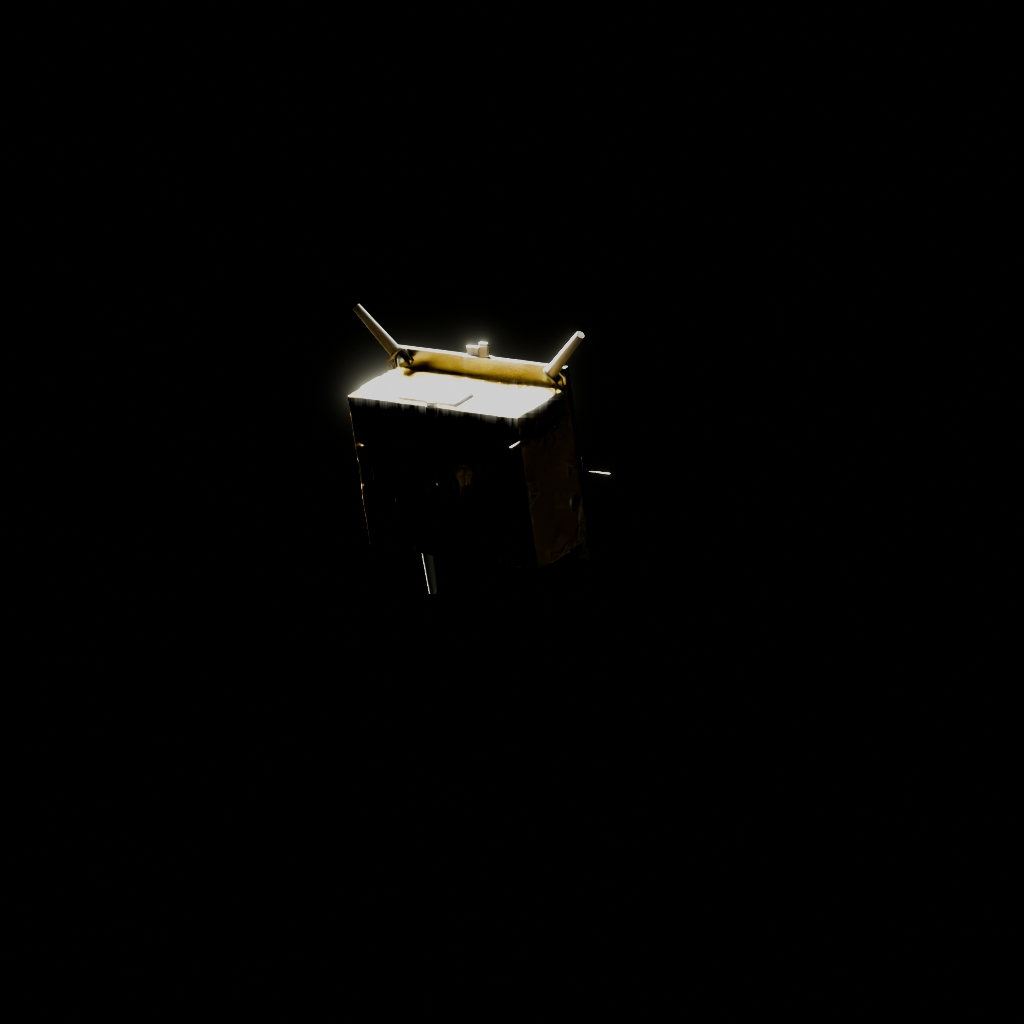
In parallel, ADONIS tackles the operational side of the problem: developing the deep learning navigation algorithms that let a satellite see, interpret, and approach its target, while testing CIRI in simulated microgravity at Poznan University of Technology. We're teaching the satellite to dock. That starts with creating high-quality datasets through orbital simulations coupled with a Blender model — recreating the lighting, geometry, and viewing angles a real spacecraft would encounter on approach — and then using those datasets to train machine learning algorithms to guide the satellites through the final, most delicate phase of rendezvous. The optical markers developed for the new CIRI variant feed directly into this work, giving the algorithms a consistent visual reference to lock onto. Alongside the software, we're putting the physical docking mechanisms through their paces in the closest conditions we can get to orbit without leaving the ground, confirming that the hardware behaves as the simulations predict. The result is a tight loop between virtual training and physical validation — each side sharpening the other before the two ever meet in space.
Between the two projects, we're going after the problem from both sides (environmental survivability and operational performance) with the goal of getting to an in-orbit demonstration.
Thank you, ESA BIC Poland!
None of this would have been possible without the programme. ESA BIC Poland gave us funding for our first prototypes, a mentorship network that sharpened our business thinking, and the credibility to be taken seriously in a conservative industry. We're grateful, and glad we get to keep going together.
The satellites of tomorrow shouldn't be limited by the fuel they carry at launch. We're building the infrastructure to make sure they aren't.